THE SHORT ANSWER
Cosmetic damage sits on the surface: paint, bumper covers, trim, glass and bolt-on panels. Structural damage touches the frame, rails, pillars, roof or floor, which manage crash forces and protect the cabin. A damage record, auction photos and any total-loss or salvage entry tell you which way a car leans. Only a shop's measurements confirm it.
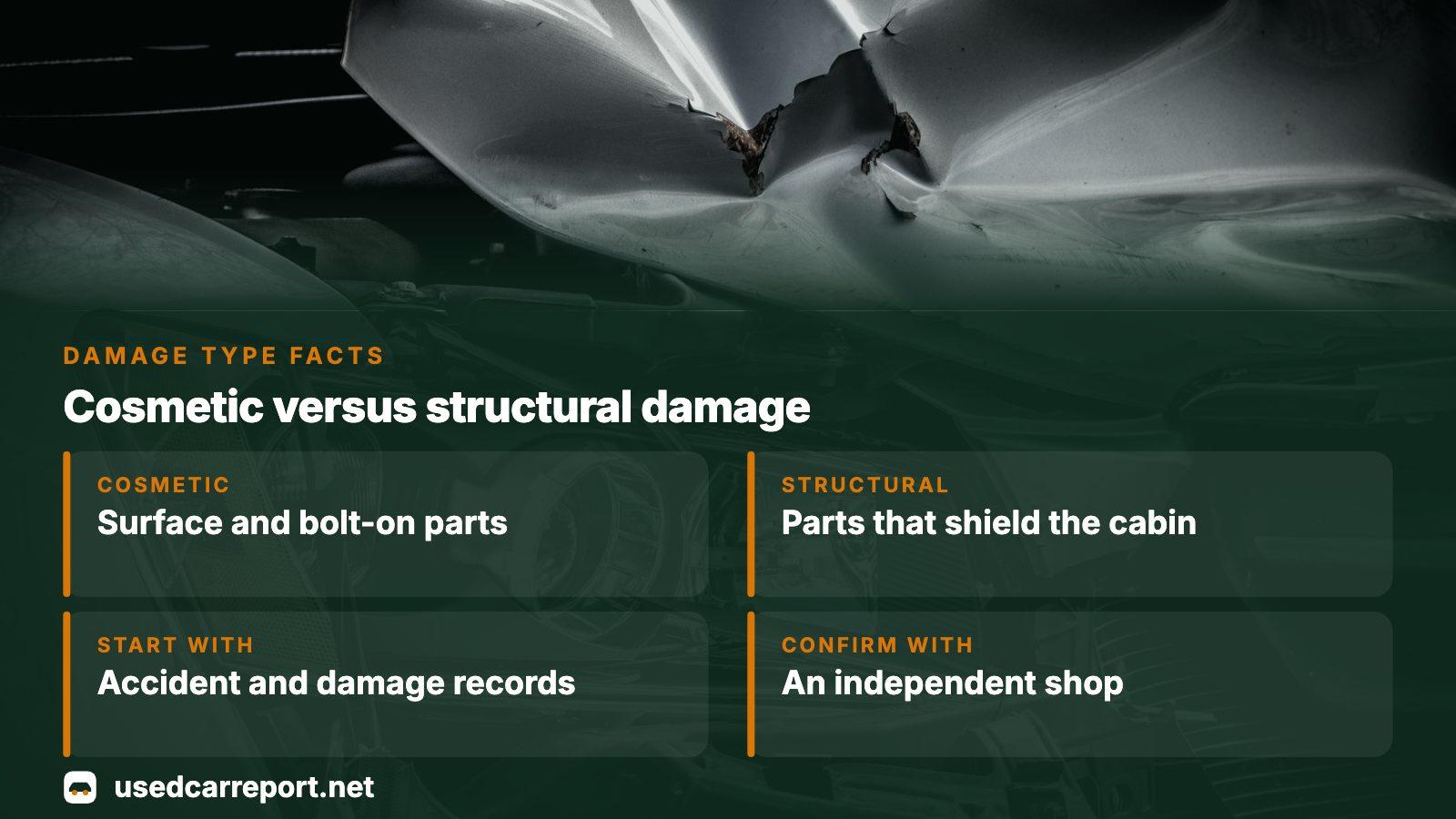
- Cosmetic
- Surface and bolt-on parts
- Structural
- Parts that shield the cabin
- Start with
- Accident and damage records
- Confirm with
- An independent shop
Start with the record, not the paint
Most buyers judge damage by looking at a car, and a good repair is built to defeat that. The record works the other way around. It was filed when the damage happened, before anyone had a reason to make the car look right. That is why the accident and damage section deserves your first ten minutes.
Read each entry for three things: where the car was hit, whether a total loss or a title brand followed, and whether the car went through an auction with photos. A hit to a rear corner that ended with a respray tells a different story from a front impact that ended at a salvage auction.
Where the line falls between the two
No federal page I read defines either term, so this is a working split. Cosmetic damage is anything you can replace or refinish without disturbing the shell that carries the loads: scratched paint, scuffed plastic, a dented door skin, a cracked lens, a pitted windshield. Structural damage is anything that bends or breaks the shell itself.
| Cosmetic | Structural |
|---|---|
| Paint scratches and clear-coat chips | Bent or kinked frame rails |
| Bumper covers and grille trim | Pushed-in A, B or C pillars |
| Bolt-on fenders and door skins | Crushed roof edge or roof rail |
| Glass, mirrors and lamp lenses | Distorted floor pan or firewall |
| Shallow hail dimples | Cracked or re-welded structural seams |
Bolt-on panels are cheap to swap, which is why a replaced fender is only a clue. The question is what made the swap necessary.
Why the shell matters when the next crash comes
Crash tests make the point. The Insurance Institute for Highway Safety runs a small overlap test in which a car drives into a barrier at 40 mph with 25% of its width engaged, imitating a corner meeting a pole or tree. Engineers then measure how much the occupant compartment was pushed in.
The institute's side test fires a 4,200-pound moving barrier at 37 mph into the driver side, shaped to bend around the pillar between the doors. Its retired roof test used a metal plate pressed into one side, and a good result meant the roof withstood at least 4 times the vehicle's weight before it crushed 5 inches. A shell that was folded and pulled back may not manage those loads again.
What a history report can and cannot tell you
A report can show that damage was recorded, sometimes the area, and often photos from an auction. It cannot grade a repair. The federal title system puts it plainly: a total loss or a salvage history generally means severe damage, and the buyer is warned the car may be unsafe.
The same system keeps its own report short on purpose. Its five items are title status, brands, mileage, total loss and salvage, with repair histories left to private providers. Treat the record as a map of where to look. The free preview lists the entries that exist for a VIN, and one payment opens the full report.
How the law decides a car is too damaged to fix
Federal title rules never say structural. They ask whether repairing a car makes sense in dollars. A car is salvage when the value of the wreck, plus the bill to make it legal on public roads, exceeds what the car would have sold for just before the damage. A total loss also counts supplements, lost resale value and rental costs.
Reading a brand
A salvage or total-loss entry means the repair bill outran the car's value. It is not proof of a bent frame, but it is the point where structure becomes your first question.
An owner's account of the resale hit
From an NHTSA owner complaint
A 2011 BMW 328xi owner told NHTSA that a vehicle report listed frame or structural damage, traced back to a Texas auto auction in 2014. By 2017 the owner was struggling to sell: bids came in lower than expected, and a national used-car retailer reacted the same way.
So a structural note outlives the sale that created it. Each later owner pays for it again at resale, which makes the purchase day your best chance to turn it into a discount.
Getting a shop to settle it
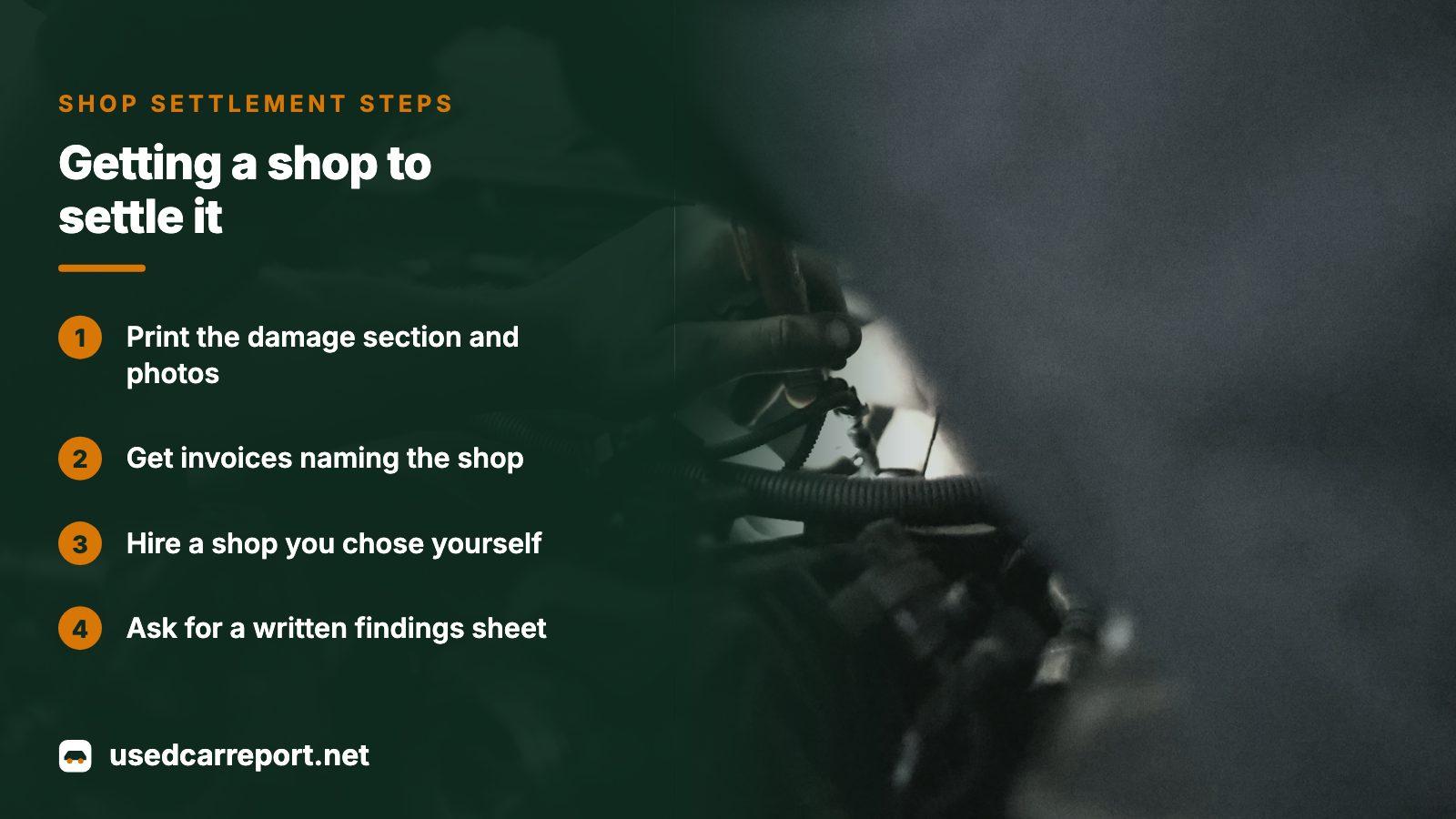
- Print the damage section and the auction photos, if any.
- Get the seller to hand over repair invoices, including which shop did the work.
- Hire a mechanic or body shop you chose yourself.
- Ask for a written findings sheet with repair estimates, listing make, model and VIN.
- Negotiate with that sheet, or leave.
The Federal Trade Commission says a history report can mention crashes and flooding yet usually leaves out mechanical faults, and so is no replacement for an independent inspection. It adds that a safety inspection is a different thing from a mechanical one. If the seller will not let anyone inspect, that tells you something too.
Where this information comes from
- NMVTIS: Understanding an NMVTIS vehicle history report — what total loss and salvage history signal and what a title report omits
- 28 CFR 25.52 definitions — federal wording for salvage and total loss
- FTC: Buying a used car from a dealer — independent inspection and written repair estimate advice
- IIHS: Small overlap front test — how a frontal corner crash tests the cabin structure
- IIHS: Side test — how a side impact is simulated
- IIHS: Roof strength test — why roof strength protects the survival space
- NHTSA owner complaint 11006482 — owner experience, paraphrased
Sources and photos: Facts checked against the sources above in November 2026. Photos by Clarence Tioh, Mustafa Sheikhmouss and Clark Van Der Beken on Unsplash; diagrams by UsedCarReport.
Keep reading
- Frame damage check: start with the accident and damage recordsHow to check a frame when the records hint at a hit.
- Damage reported on Carfax: how to read the line before you buyWhat a damage entry means and what it leaves out.
- Paint depth gauge on a used car: what the readings can and cannot showA hands-on test for hidden bodywork.
- Pre-purchase inspection: read the damage records, then hire the mechanicWhat to ask an independent shop to look at.
Frequently asked questions
Should cosmetic damage stop me from buying?
Seldom. A dull finish or a cracked lens usually just earns you a lower offer. Be careful only when a surface flaw could be sitting on something deeper, and let the records and a shop decide.
Is structural repair ever done well?
In some cases, if a qualified shop used the maker's repair steps and measured the result. Proving that is the hard part. Collect the invoices, parts lists and measurement printouts, then let a second shop check the geometry.
Can a clean report still hide structural damage?
No. A report only repeats what someone filed, and a hit settled privately may never appear. A clean record shifts the odds in your favor, and an exam of the actual car covers the rest.
Will a structural entry hurt what I can sell it for?
Usually. Buyers who read a structural note adjust their offers downward, and the note stays on file. An owner's complaint to NHTSA describes exactly that squeeze at resale.
Does a deployed airbag mean structural damage?
Not by itself, though it signals a hard hit. Ask who replaced the airbag parts, look for repairs near the point of impact, and add that spot to the inspector's list.
Now check the car itself
The guide explains what to look for. The report shows what this VIN has on record.